
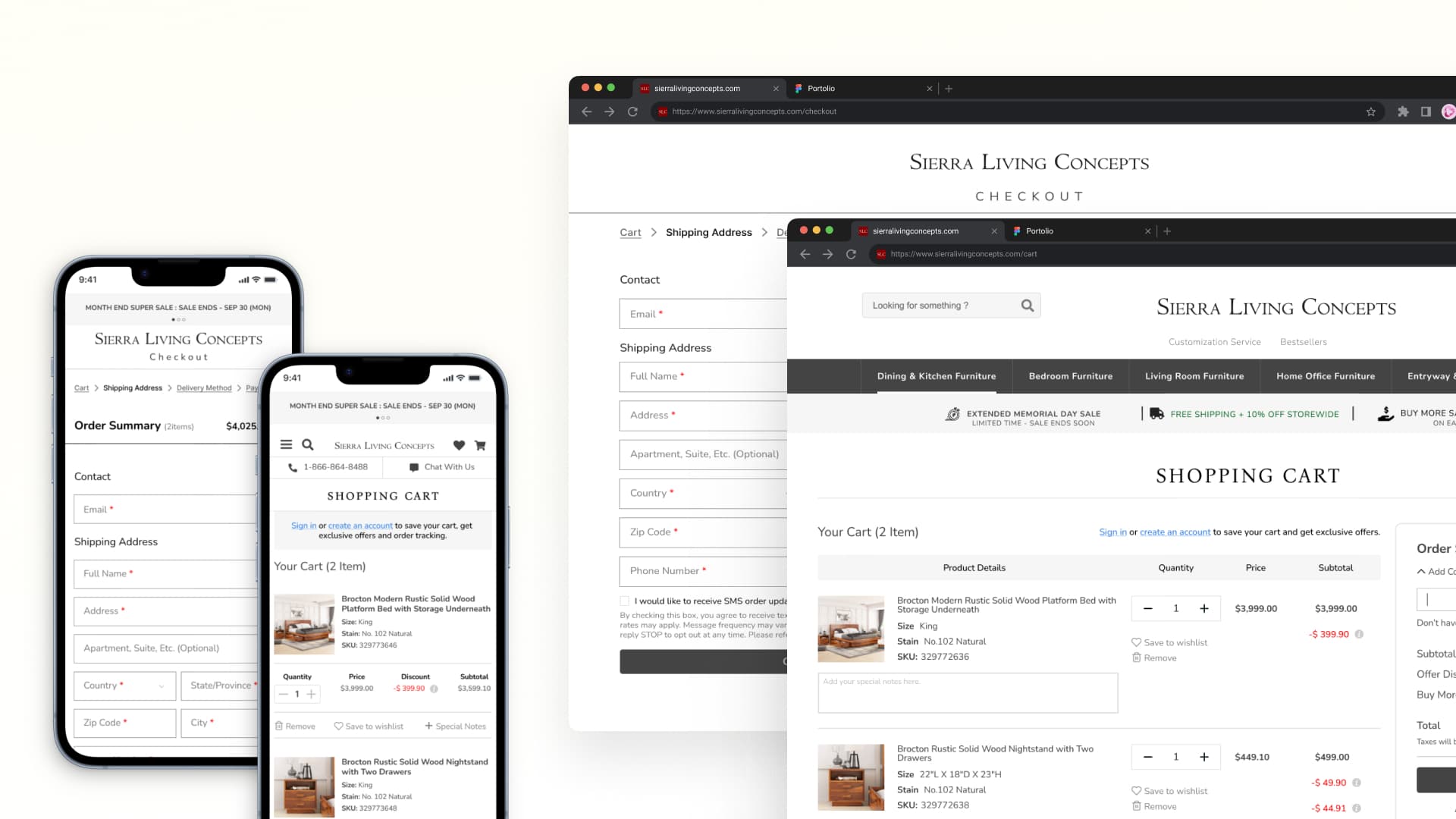
Sierra Living Concepts (SLC)
Redesigning Cart & Checkout, Reducing Abandonment by 26% Across 480k User Sessions
E-Commerce • E-Commerce • UX Strategy
Focused on optimizing checkout flows to boost conversions and decrease abandonment for Sierra Living Concepts, a brand of luxury furniture shoppers in U.S.
Introduction
Sierra Living Concepts (SLC) is a U.S.-based luxury furniture retailer with a significant online presence. SLC had a requirement to increase online sales and meet customer expectations through a seamless checkout experience.
As the Lead UI/UX Designer, I was the sole designer on the project, collaborating closely with Saswata S. SenGupta (Sr. Product Manager) to tackle conversion challenges on the cart and checkout pages.
Problem Statement
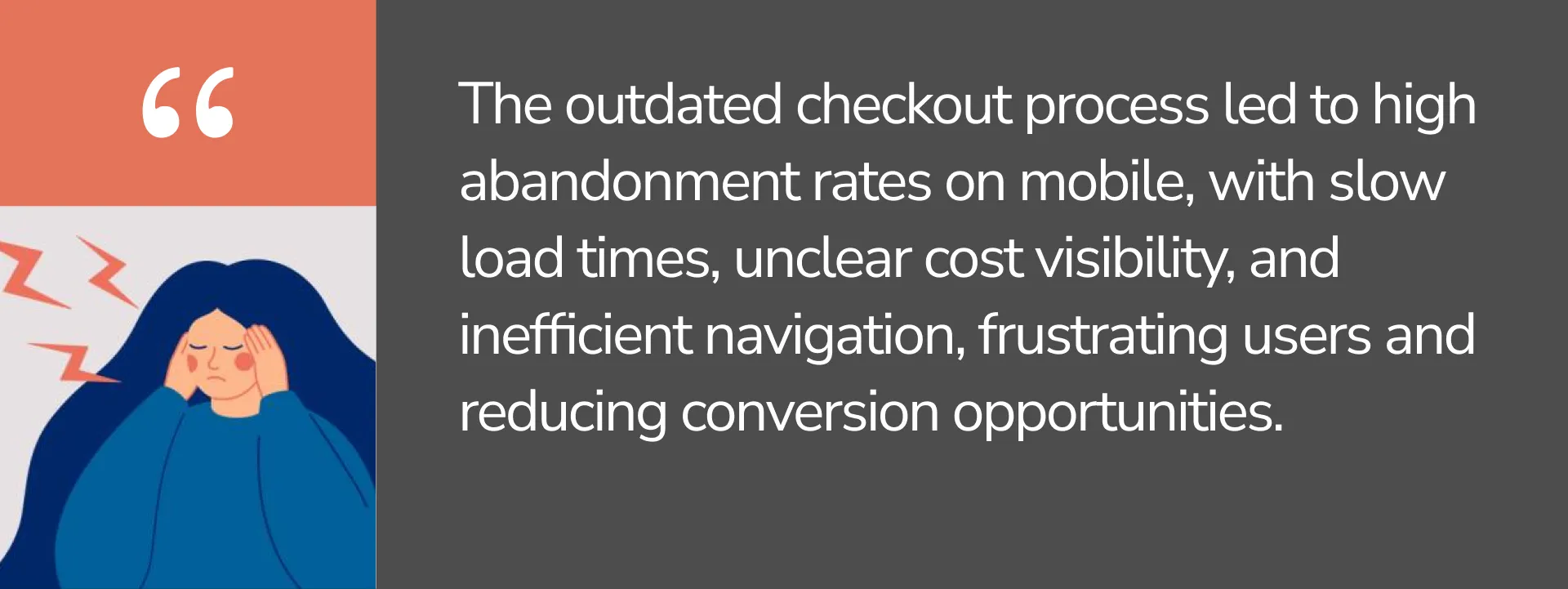
Problems & Insights
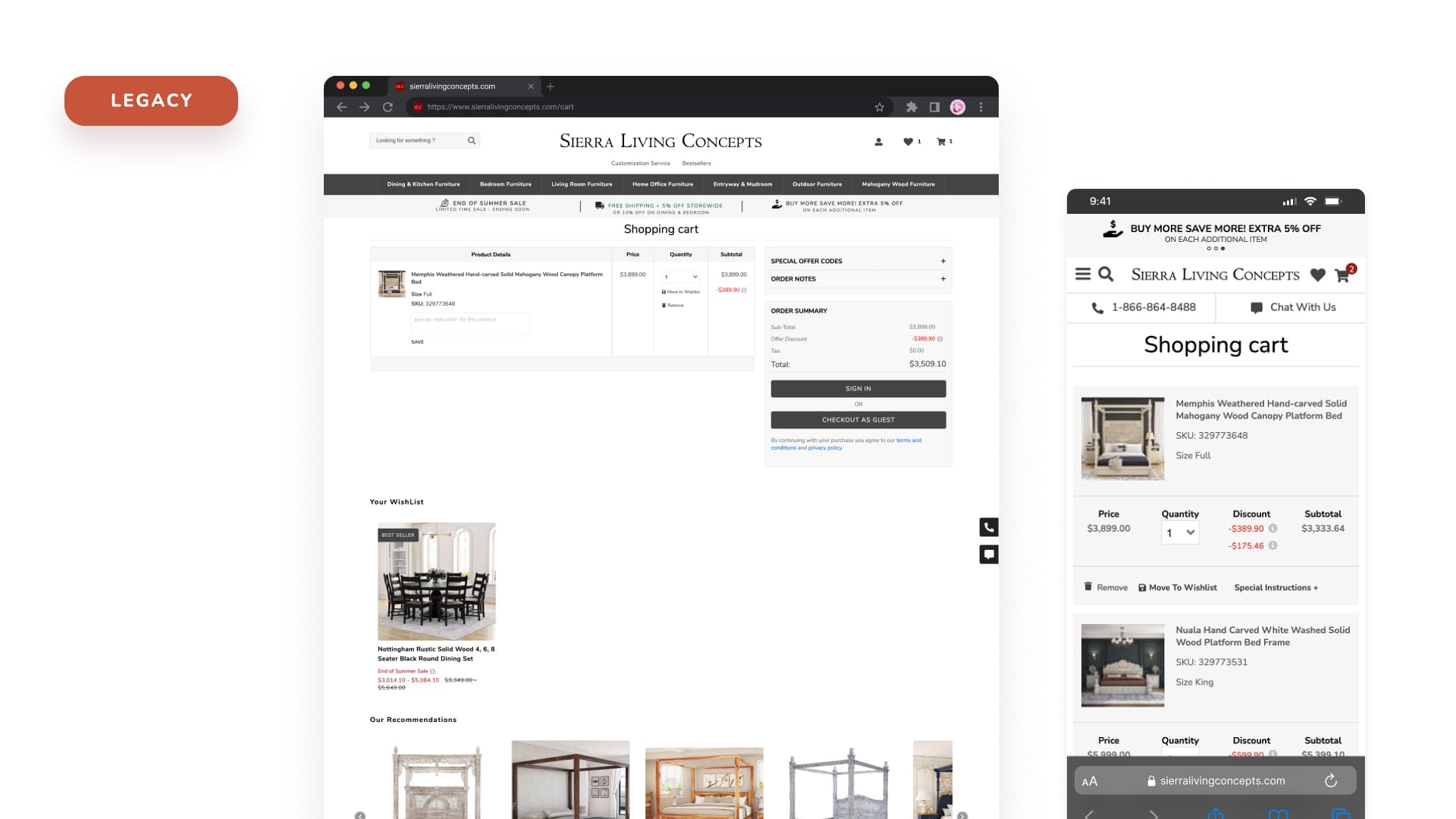
Problem 1: Distractions and Overload on Cart Page — SLC's Cart Page suffered from its own success. It was so feature-rich that it overwhelmed shoppers. With too many distractions like excessive product recommendations and prominent marketing banners, customers frequently lost focus and abandoned their carts.
Problem 2: High Checkout Abandonment Rate — The checkout process was a 5-step linear flow with no progress indicator. Users had to create an account before completing a purchase, creating an unnecessary barrier. Form fields were dense, error messages were generic, and the mobile checkout was nearly unusable with tiny tap targets and horizontal scrolling tables.
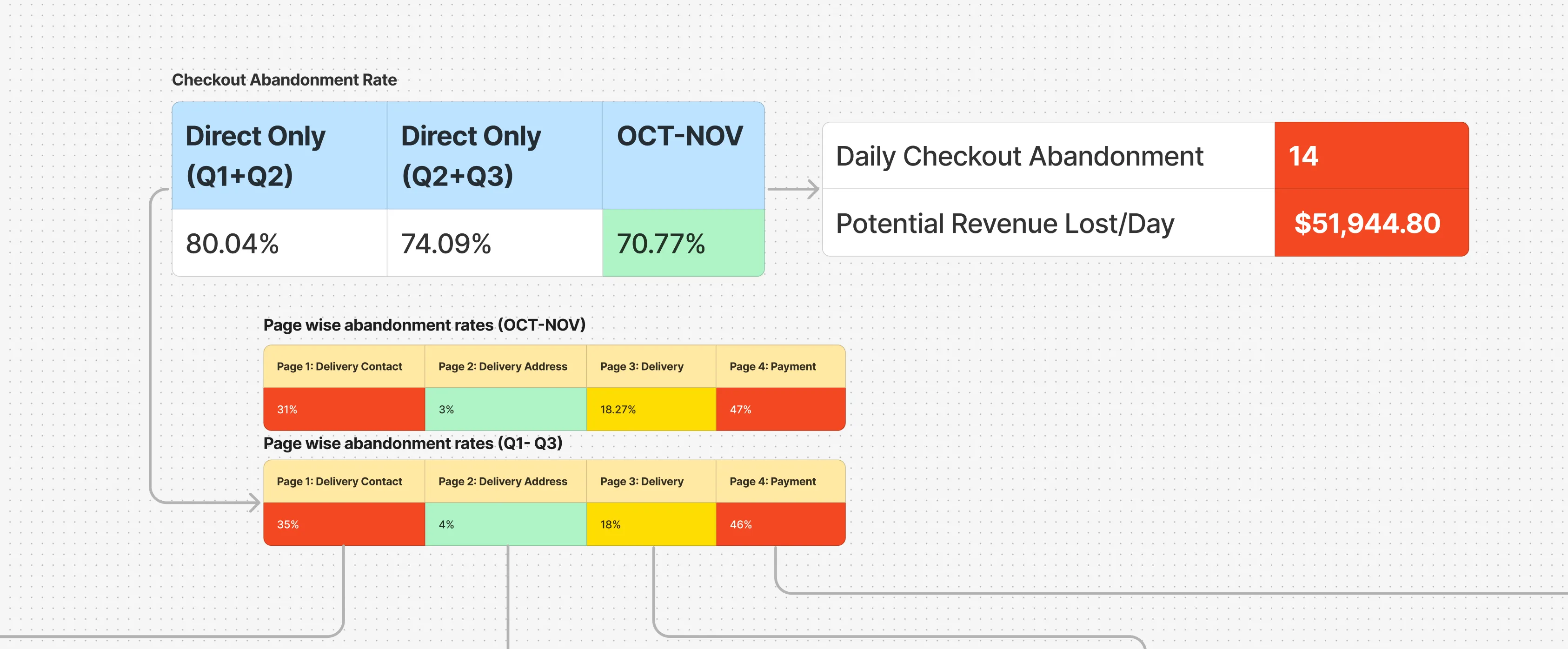
Problem 3: Navigation and Form Field Issues — The checkout flow suffered from inconsistent navigation across mobile and desktop. On mobile, the 'Continue' button was hidden below the fold, causing users to think the page wasn't loading. On desktop, the multi-column layout created confusion about the natural reading order.
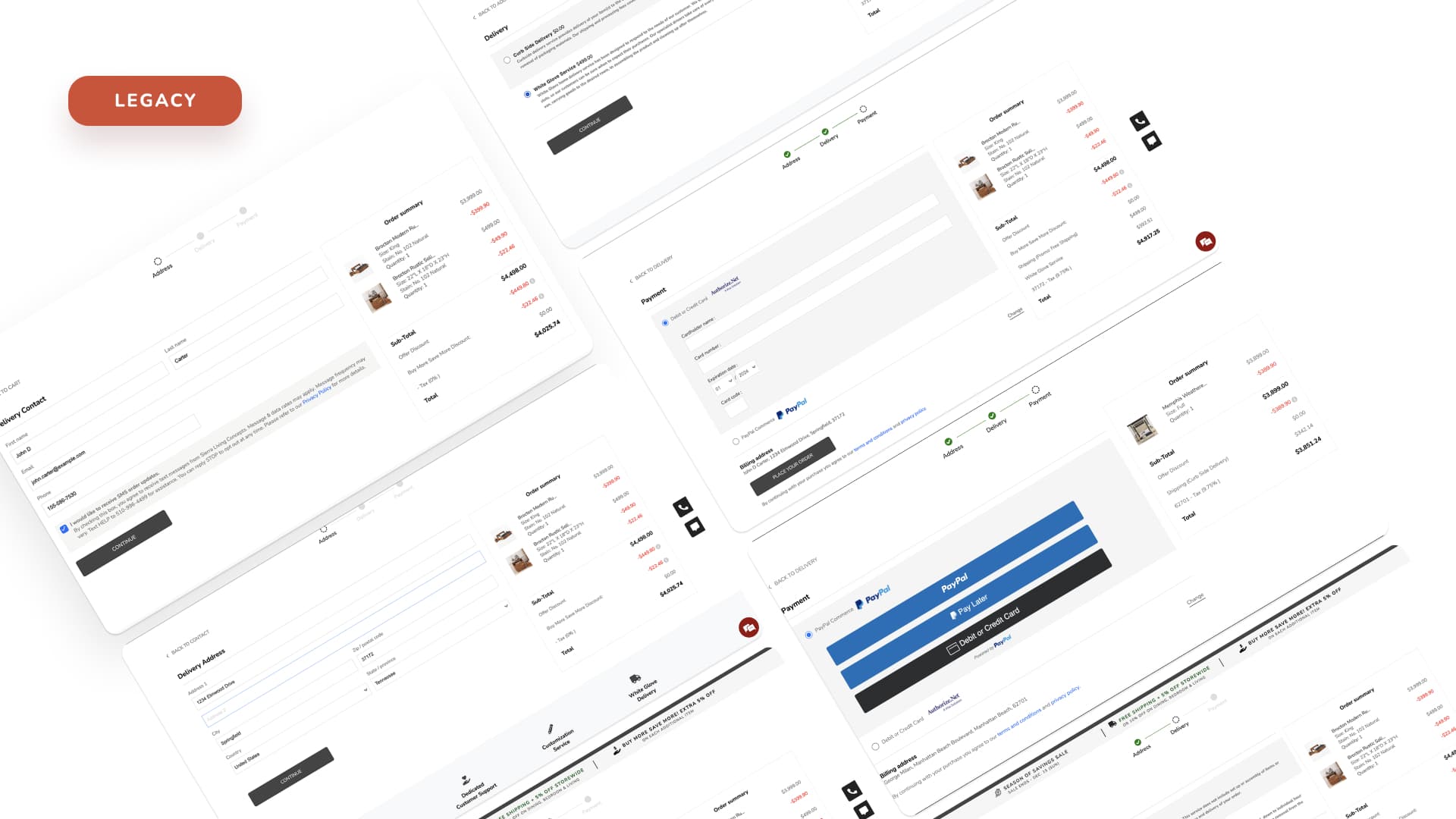
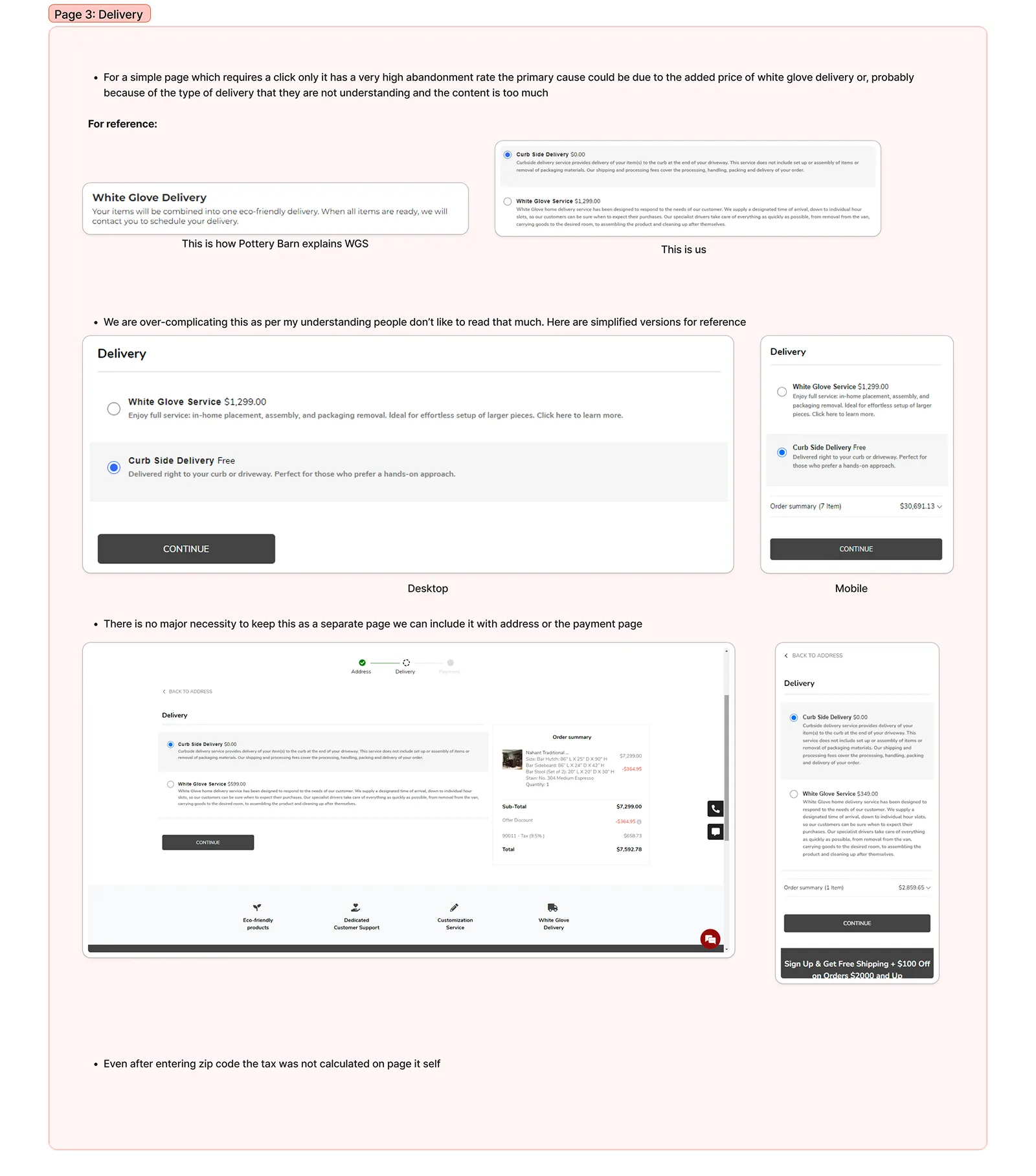
Problem 4: Complex Delivery Options and Confusion — Delivery options were complex and unclear. Users couldn't see estimated delivery dates before checkout and were frustrated by unexpected shipping costs appearing late in the flow.
“I was ready to buy a sofa for $2,000, but the checkout asked me to create an account first. I didn't want another account and a password to remember, so I just left.”
— Abandoned user, exit survey
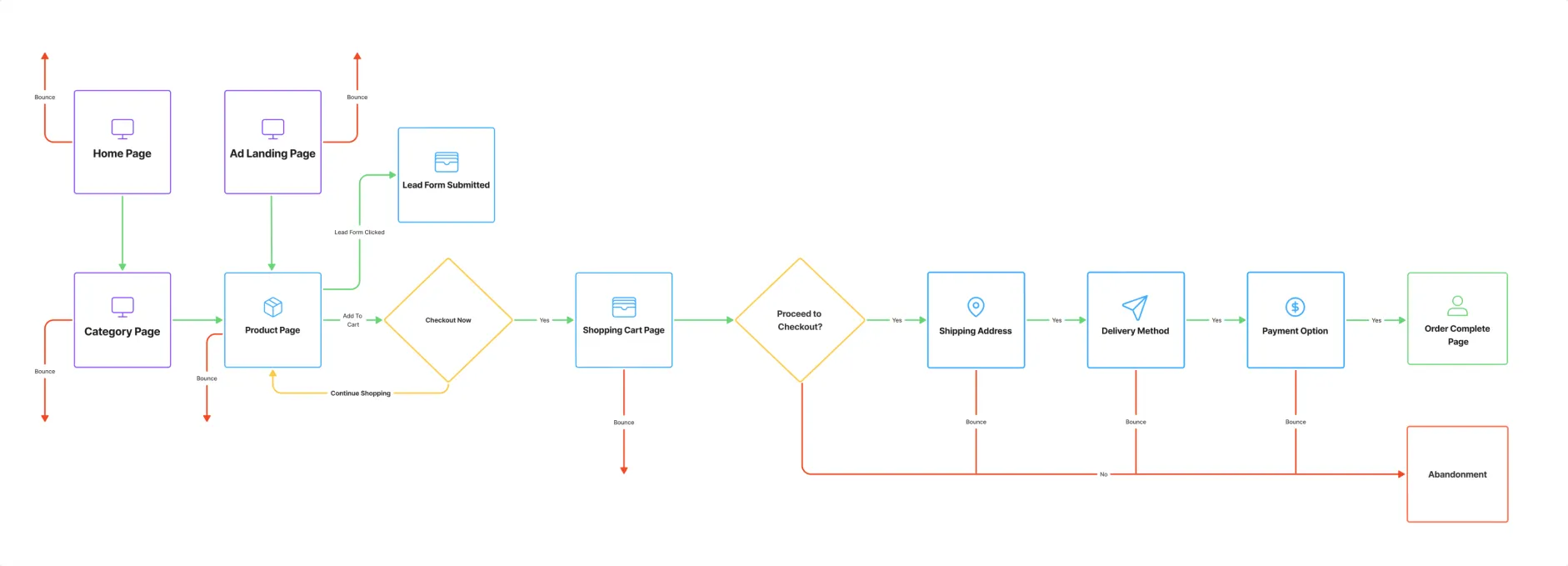
Shopping Journey Of A User
Business Goals
Increase Conversion Rates — Streamline the checkout flow to reduce friction and drop-offs, converting more visitors into customers.
Decrease Cart Abandonment — Identify and eliminate pain points in the cart and checkout experience that cause users to leave before completing a purchase.
Boost Customer Confidence — Build trust and reassurance throughout the checkout process with clear communication about shipping, returns, and payment security.
User Goals
Quick & Easy Checkout — Users want to complete their purchase in as few steps as possible, without unnecessary obstacles or information requests.
Clear Pricing & Delivery Info — Users need transparency about total costs, taxes, shipping fees, and delivery timelines before committing to purchase.
Flexible Shopping Experience — Users want the ability to review, modify, and confirm their cart contents easily without losing progress.
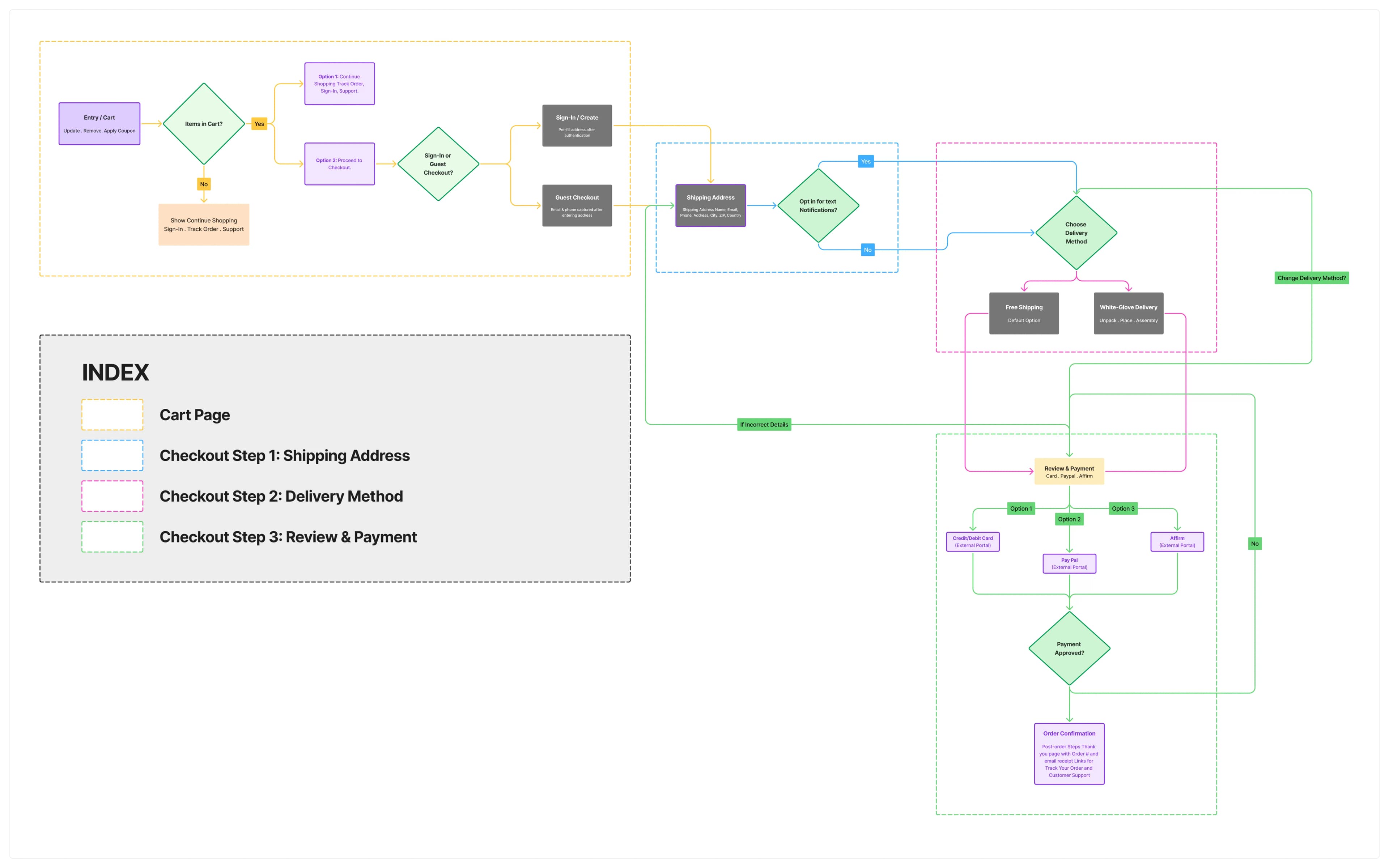
New Cart Checkout User Flow
🚀 New Proposed User Flow For Cart & Checkout Process
Solution 1: Distraction-Free Cart Page
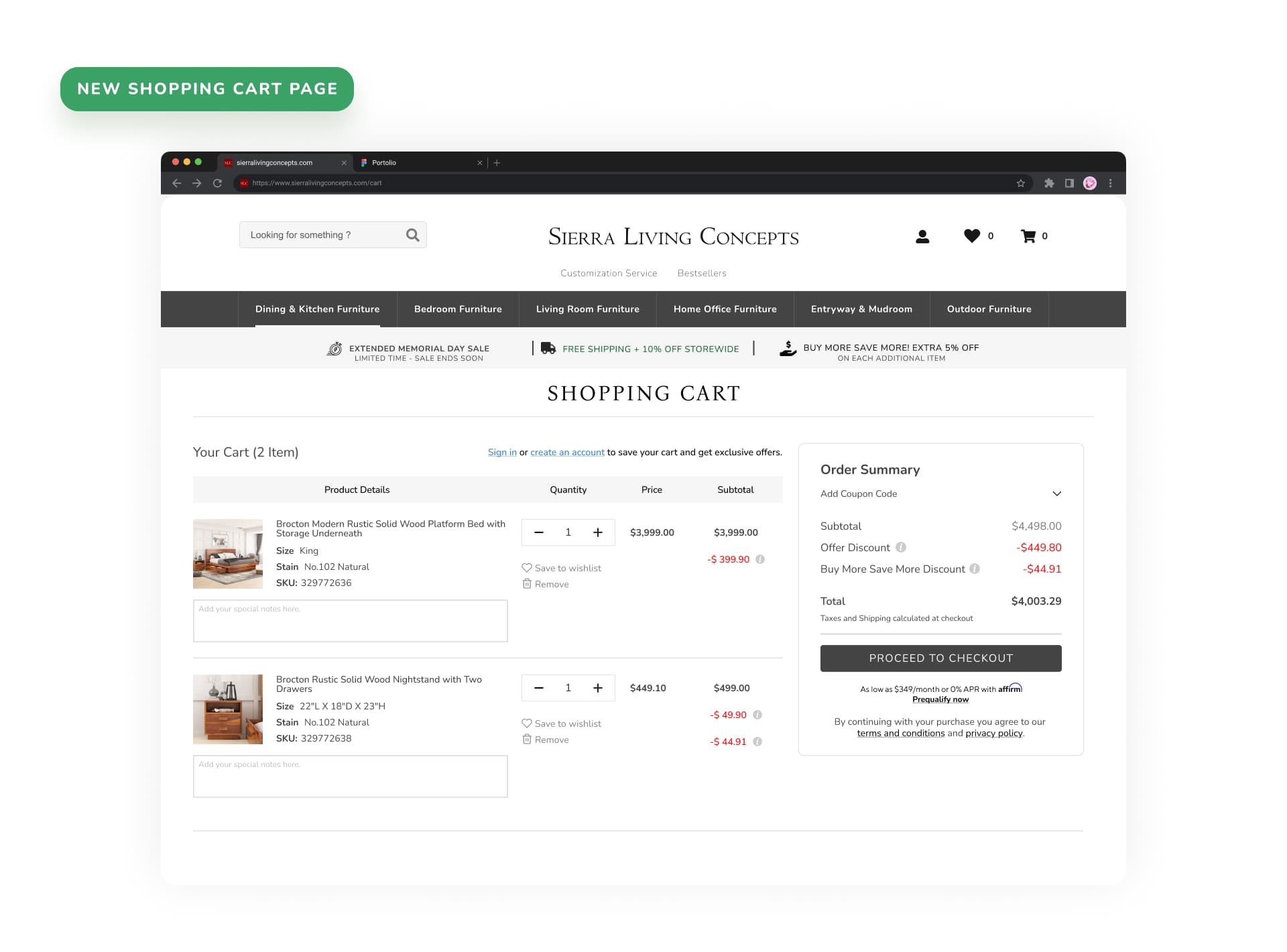
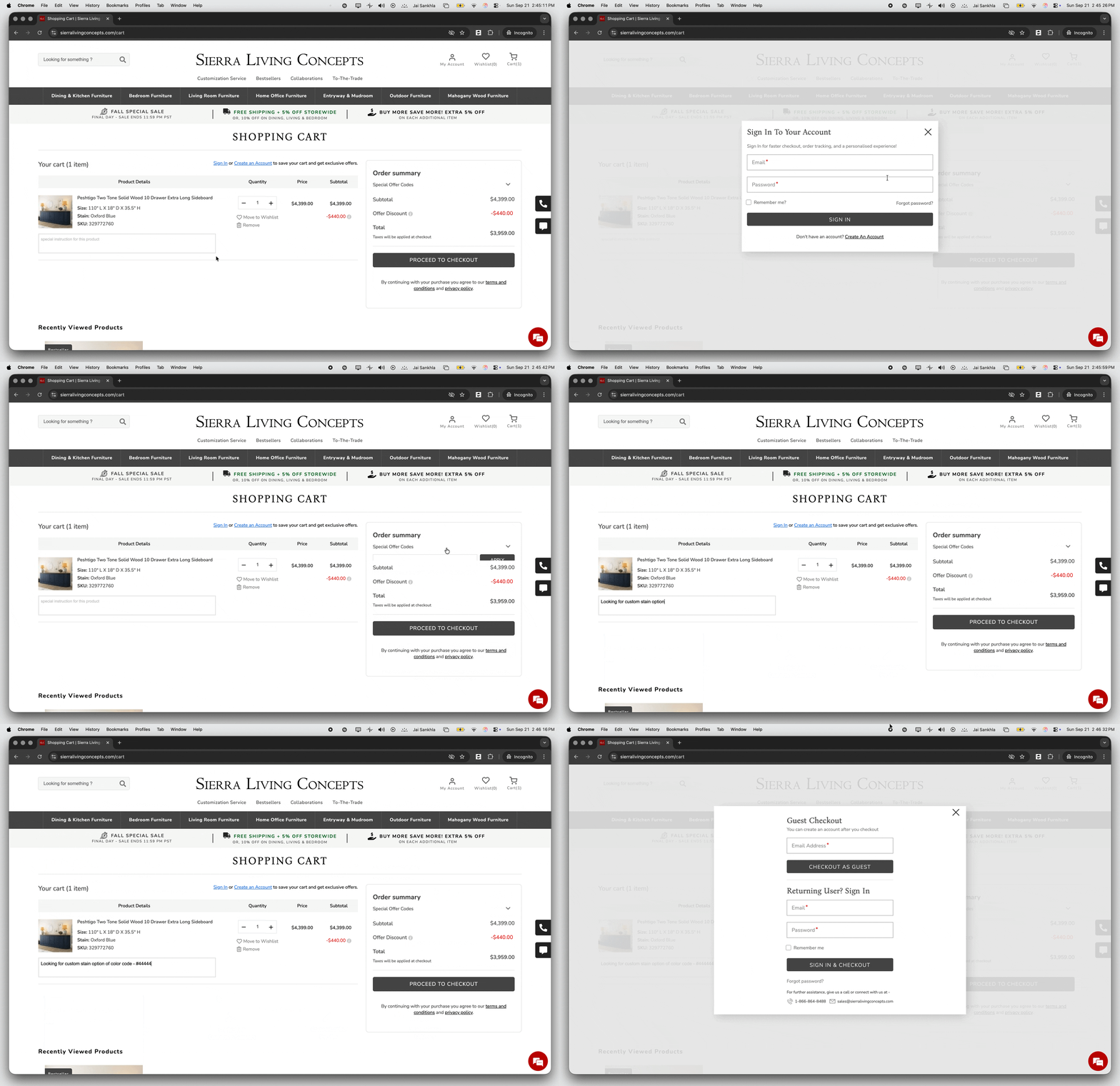
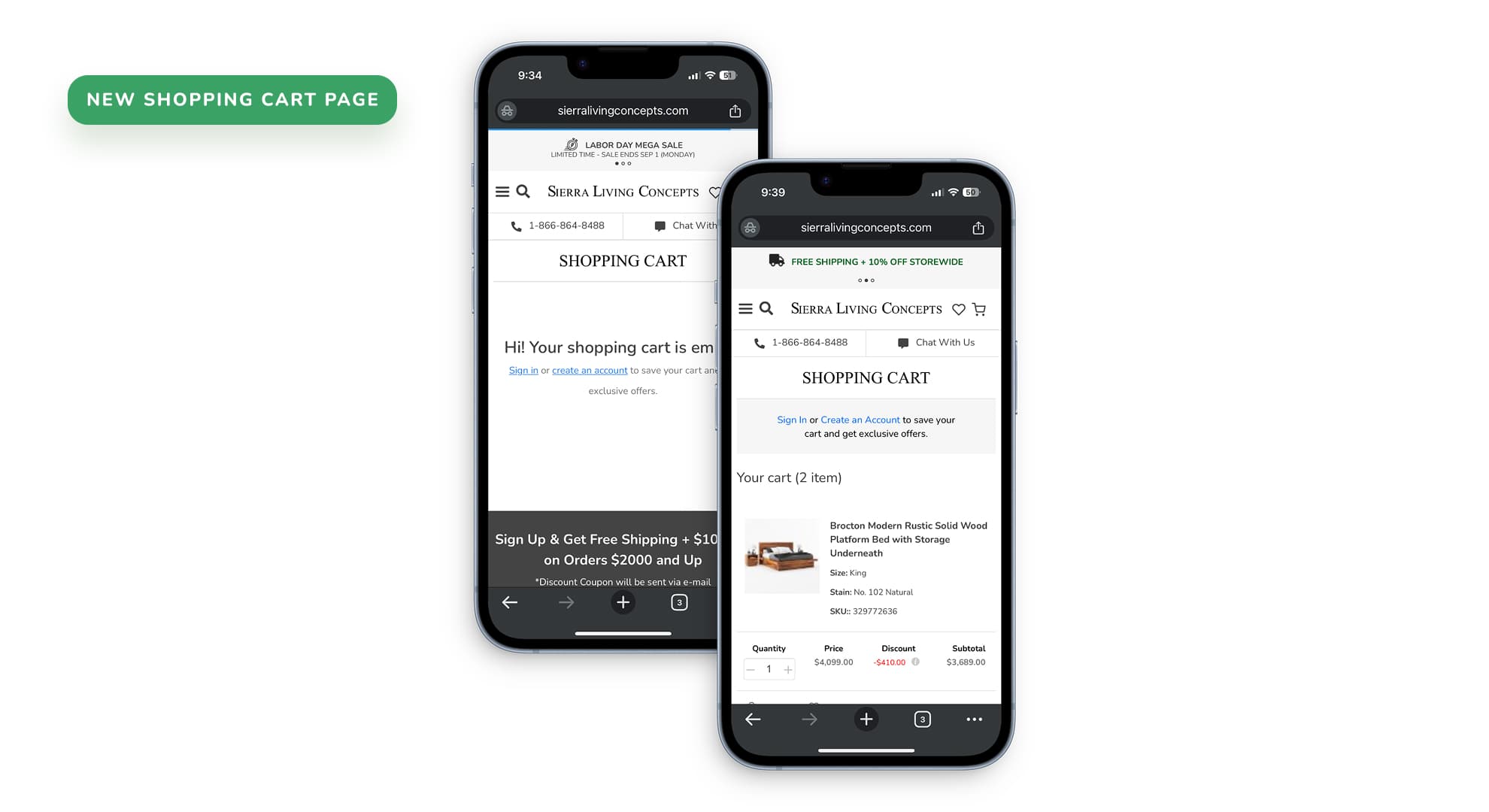
The new redesigned cart page strips away product recommendations and other detours, then layers a lightweight entry point for every type of shopper— quick sign-in, instant account creation, or one-step guest checkout—all inside modal overlays that keep the cart visible in the background.
Why it’s better
• Clear primary CTA — “Proceed to Checkout” is the only dominant button, guiding attention straight to the next step.
• Users stay in “checkout mode” — With recommendations and promotional widgets gone, there’s nothing tempting shoppers to wander off the page.
• Stay in context — Sign-in, create-account, forgot-password, and guest-checkout panels open as modals; users never leave the cart or lose their place.
• Mobile-friendly — Spacing and larger touch targets keep quantity edits or removals effortless, cutting friction for on-the-go shoppers.
• A single, Sticky Order Summary surfaces all costs (subtotal, discounts, total) in a glance, eliminating fee-shock surprises later.
Solution 2: Streamlined Address Entry & Inline Validation
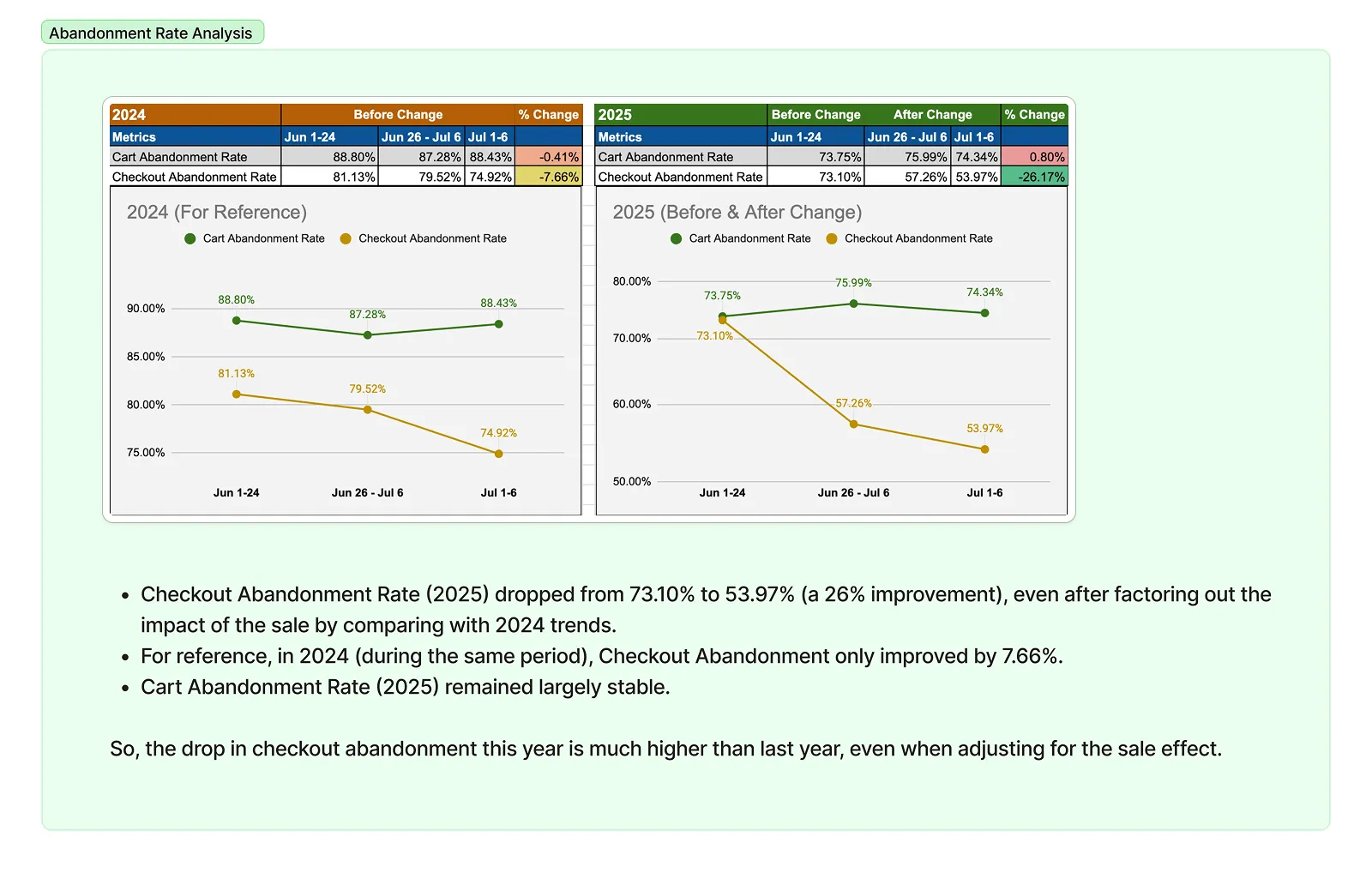
The legacy five-step funnel was collapsed into a lightning-fast, three-page flow—Cart → Address → Delivery & Payment—with live totals, inline error handling, and a sticky order summary that travels down the screen on both desktop and mobile.
Why it’s better
• -26 % abandonment proven: GA4 shows checkout abandonment dropping from 73.10 % to 53.97 % within ten days of launch, far exceeding the –7.66 % lift seen in 2024’s same-period sale.
• Live cost transparency: Shipping, tax, and discount calculations update instantly, eliminating the late-stage fee shock that previously drove 32% of exits.
• Progress breadcrumb: Clearing the “Cart › Address › Delivery › Payment” header reassures users how close they are to completing the process, reducing abandonment due to uncertainty.
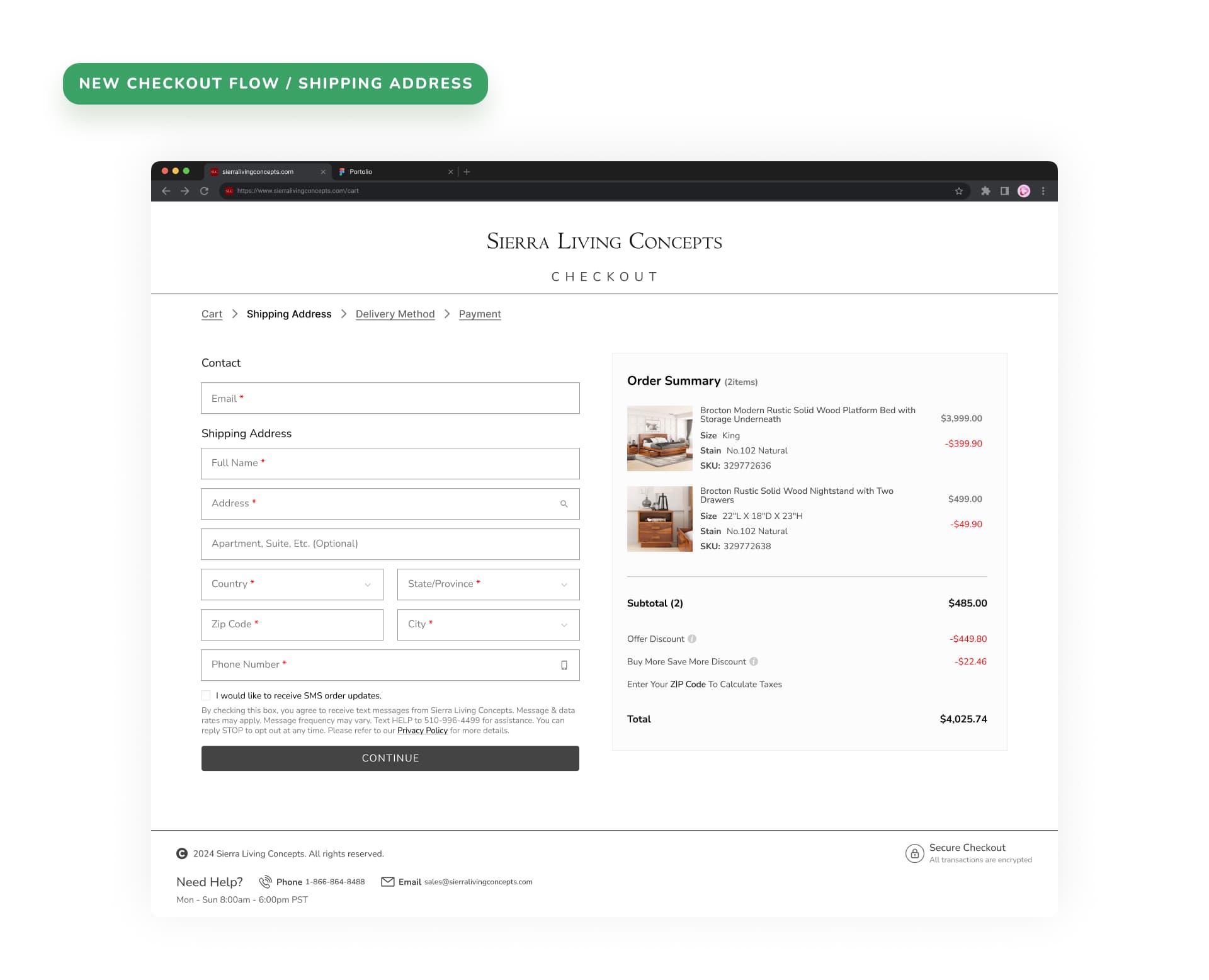
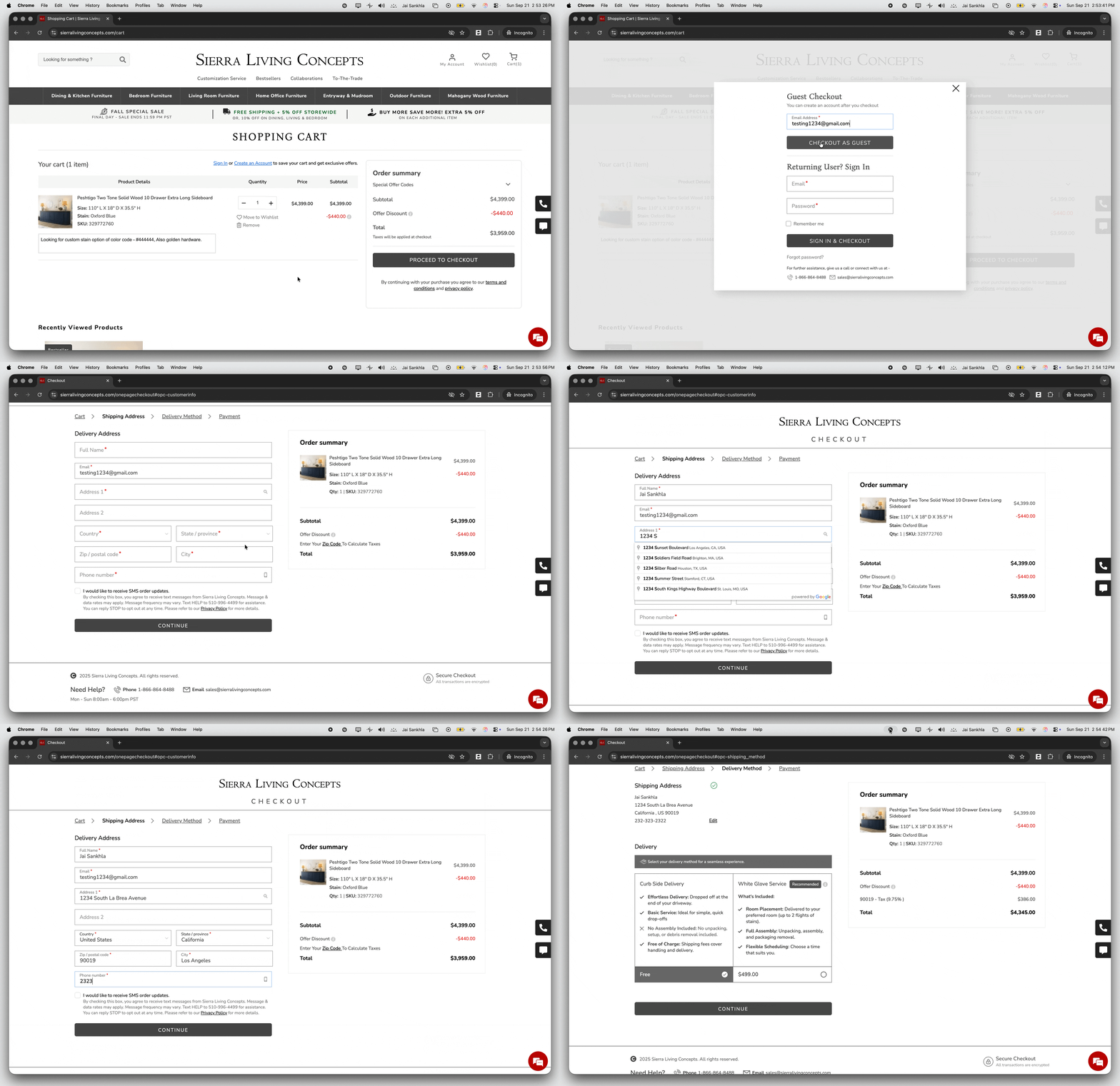
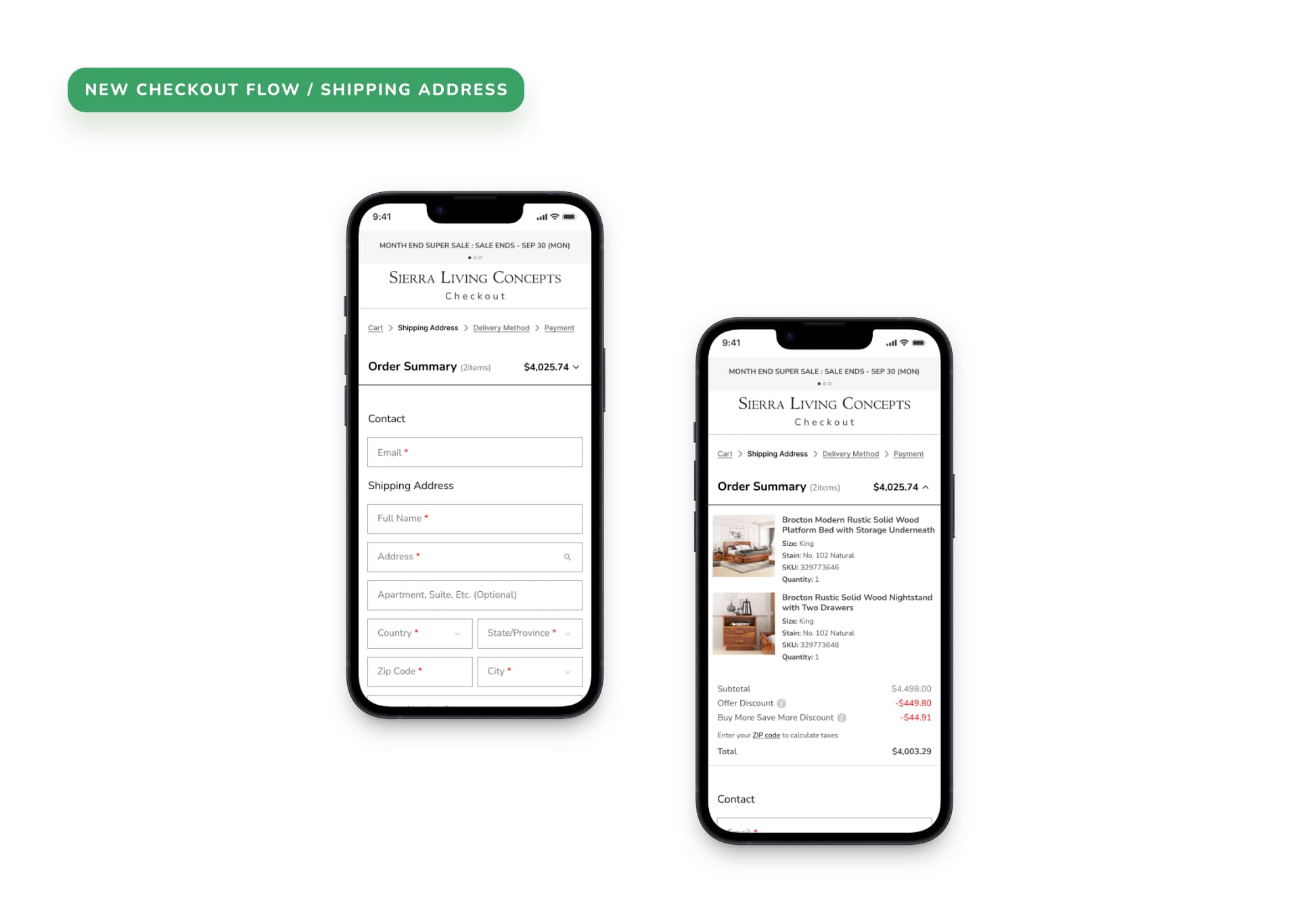
The new Shipping Address page consolidates all contact and address fields into one clean screen, adds real-time error feedback, and keeps a collapsible order summary visible, eliminating pinch-zoom, page reloads, and confusion between billing and shipping details.
Solution 3: Simplified Delivery Method Selector
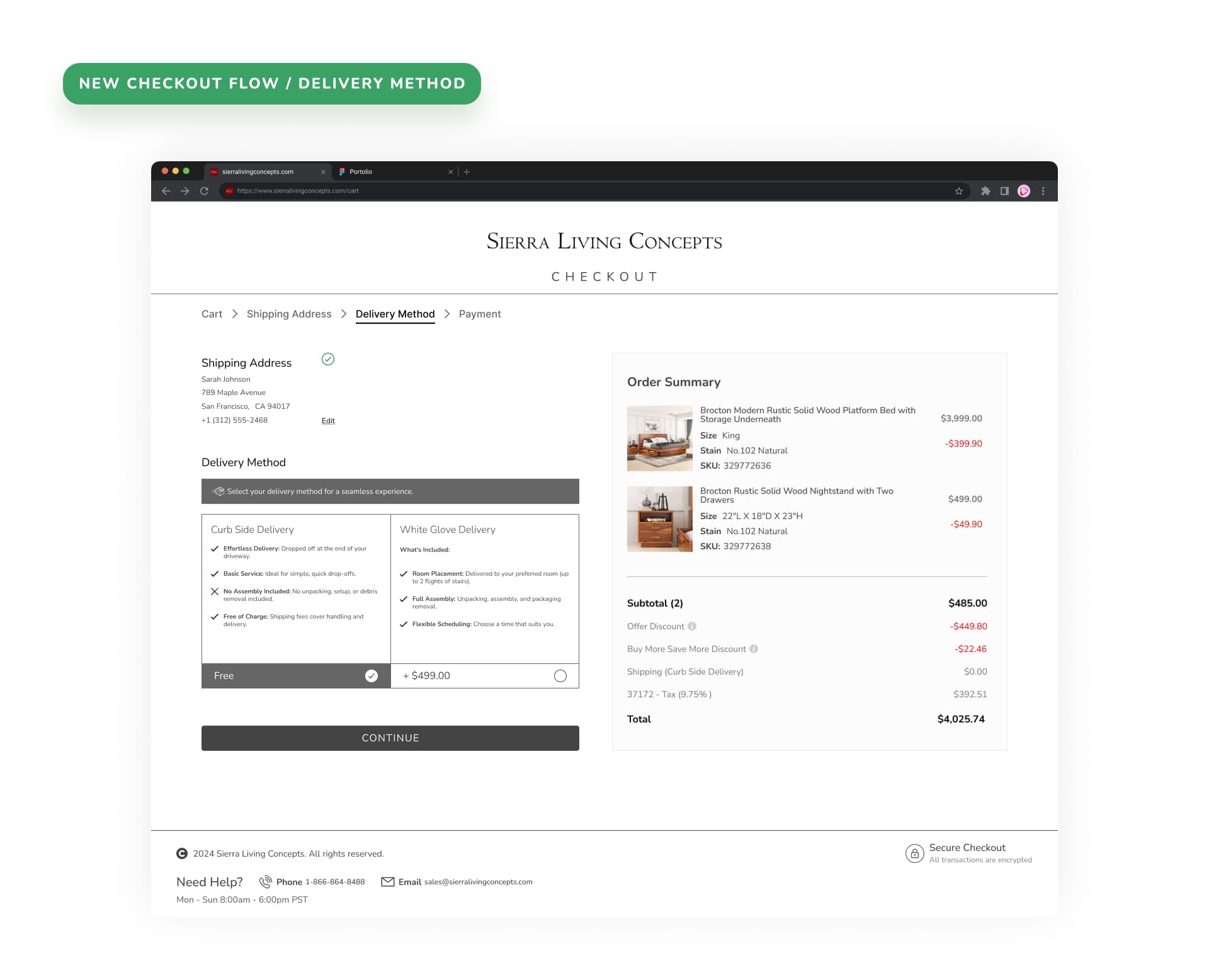
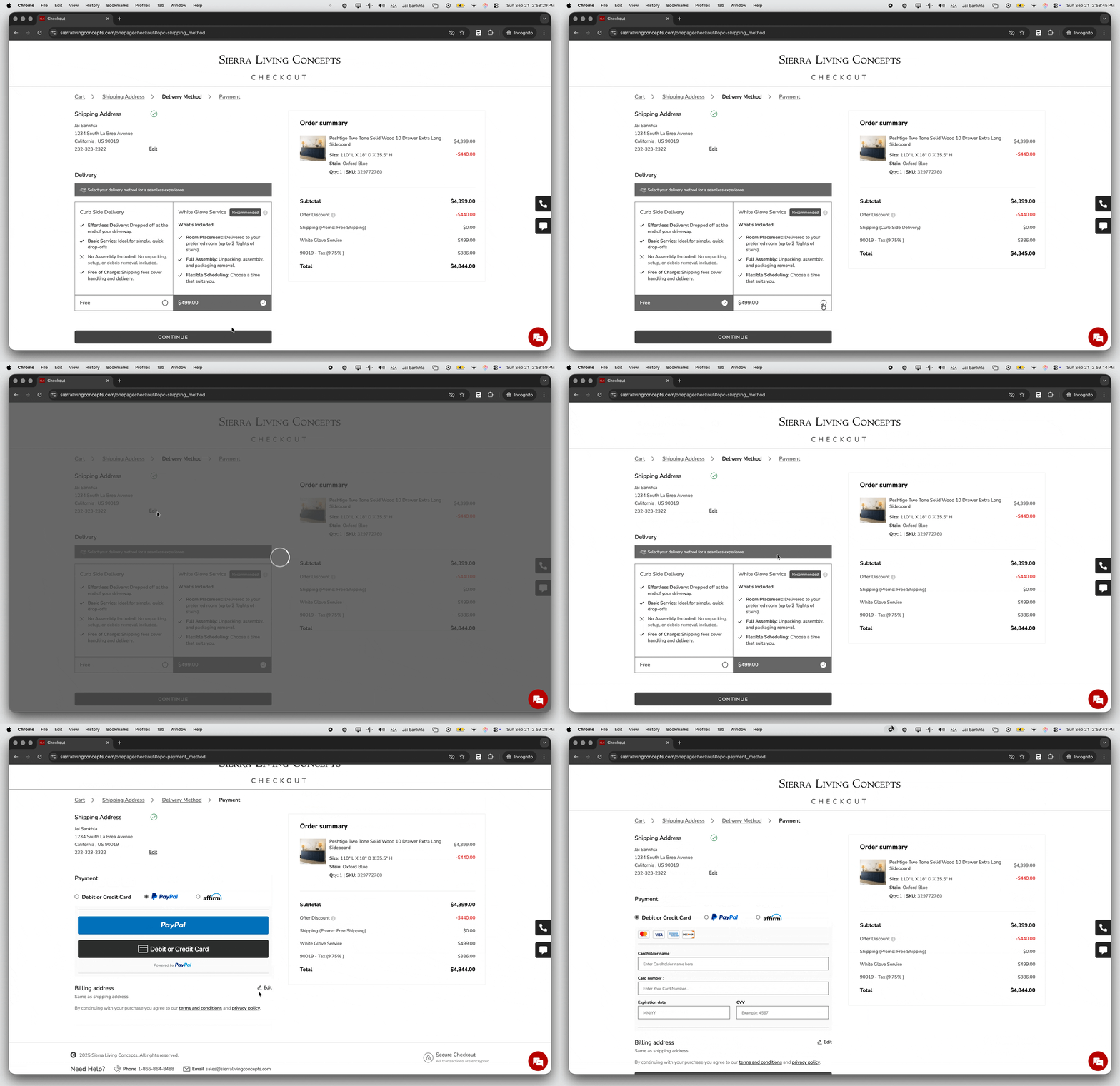
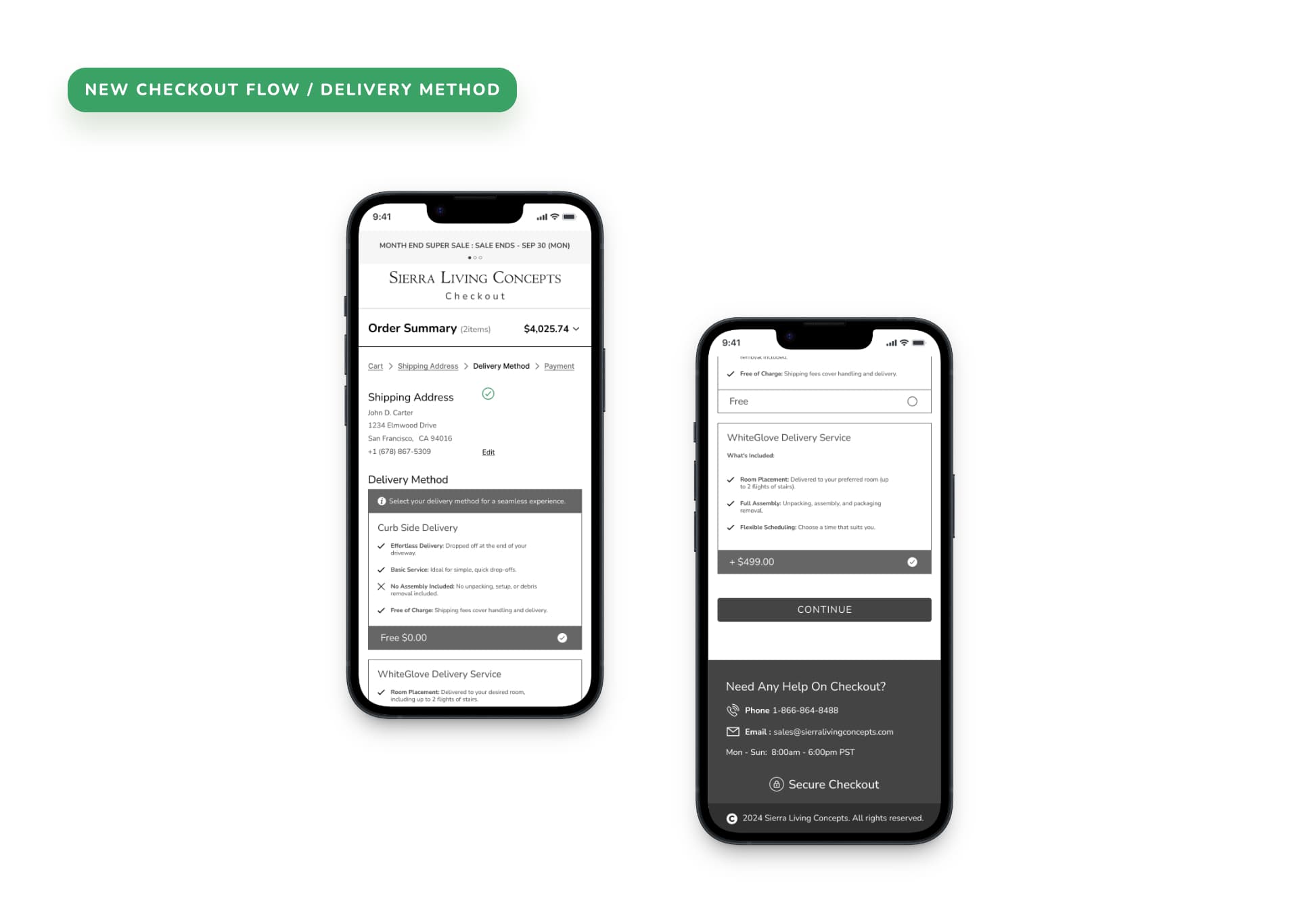
The new checkout step shows only two clearly-labeled delivery cards—Curb-Side (free) and White-Glove (paid)—with concise bullet summaries and an upfront price, while the sticky order summary stays visible on mobile for instant cost confirmation.
Why it’s better
• Each card uses plain-language bullet points — “Room Placement,” “Full Assembly” and a single, bold price, ending uncertainty about what’s included.
• One-tap radio selection — and an anchored “Continue” button streamline progress, cutting hesitation time.
• Mobile layout stacks the same cards with thumb-friendly radio buttons and keeps the help-contact block handy, reducing abandonment — on phones where choice overload was greatest.
• Inline edit link for the Shipping Address allows quick corrections — without back-tracking, preserving momentum.
Challenges & Solutions
Multi-page complexity across devices was the biggest challenge. The solution required careful information architecture — deciding what to show on each page, how to handle form state, and how to provide clear feedback without overwhelming users.
Balancing business needs (account creation for marketing) with user needs (guest checkout) led to a compromise: guest checkout with optional post-purchase account creation. This removed the biggest purchase barrier while still allowing SLC to capture user data.
Responsive design consistency meant designing mobile-first and progressively enhancing for desktop. Every component was tested at multiple breakpoints to guarantee a consistent cross-device experience.
What I Would Have Done Next
Saved Payment Methods — Implement stored payment methods for returning customers, reducing checkout friction even further with one-tap purchases.
One-Click Checkout — Integrate digital wallet options like Apple Pay, Google Pay, and Shop Pay to enable express checkout for returning and new users alike.
Abandonment Recovery — Introduce cart abandonment email sequences with saved carts, limited-time offers, and direct links to resume checkout where they left off.
Results
The redesigned checkout launched with a phased A/B test. Cart abandonment dropped from 71% to 45%, a 26 percentage point reduction. Guest checkout was used by 68% of first-time purchasers. Mobile conversion rate increased by 34%.
Signing Off
This project taught me the power of removing friction. Every field removed, every step collapsed, every error message rewritten — each small change compounded into a dramatically better experience. I’m grateful to Saswata and the SLC team for trusting me to redesign such a critical part of their business.
Thank you for reading about my journey in redesigning the cart and checkout experience for Sierra Living Concepts. If you’d like to discuss e-commerce UX or checkout optimization, I’d love to connect.

Interested in working together?